
Beyond the Headlines: Building Resilience Back into our Forests
Why Wildfires Have Gotten Worse and What We Can Do About it
We’ve seen enough headlines about devastating forest fires to know that our forests aren’t as resilient as they once were. So what’s going on and how are we building resilience back into our forests?
From fire suppression, drought, forest mismanagement, and past logging practices, we have seen the natural harmony of our forests fall into disarray.
The good news is that not all hope is lost. We are at the forefront of regional work to increase the pace and scale of forest restoration.
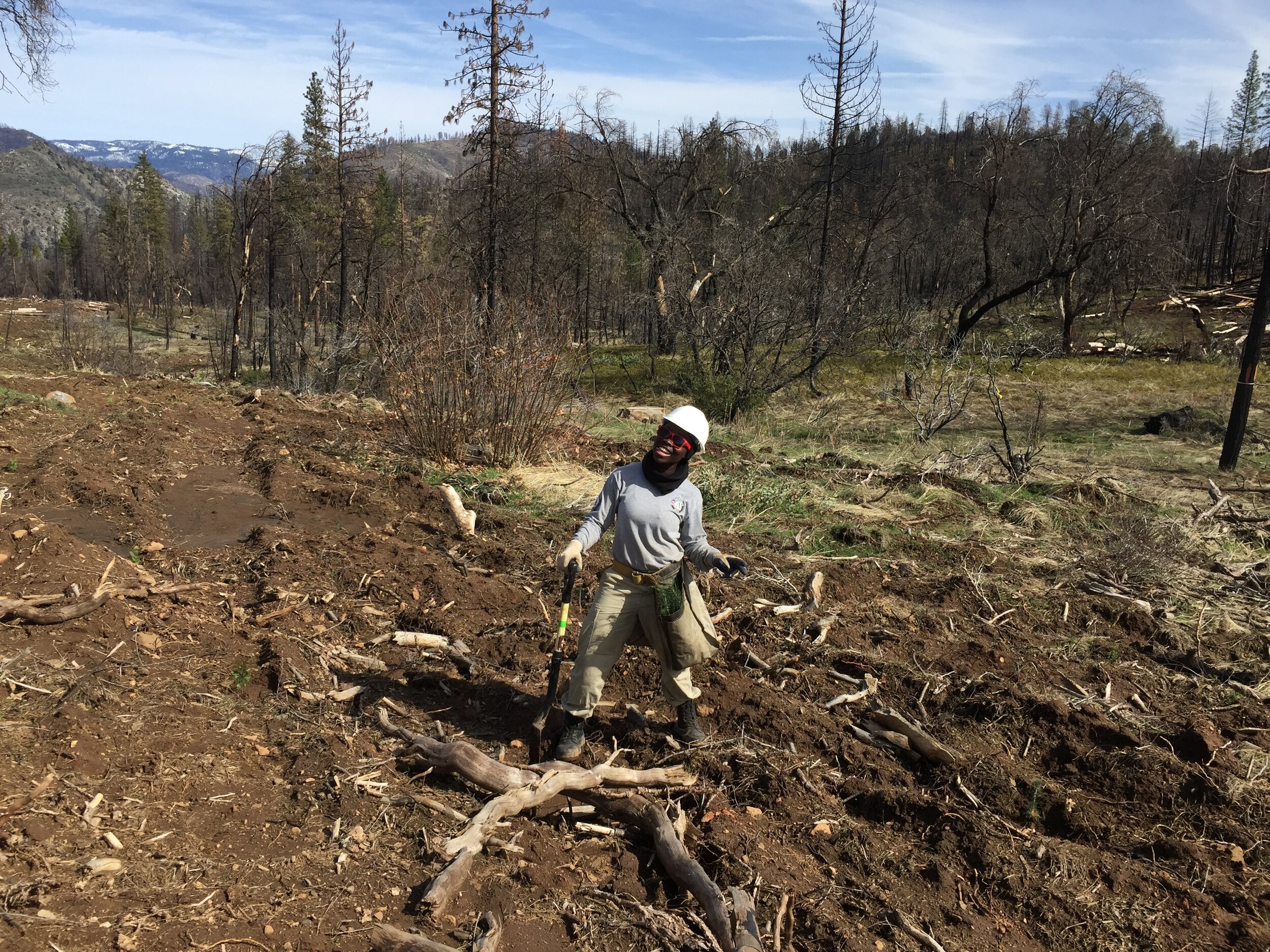
We are working with the Forest Service to restore over 23,915 acres of mixed conifer forests that either have been or are at risk of being burned by high-intensity wildfire. This restoration work reduces soil erosion, improves wildlife habitat, increases structure and thermal cover for wildlife species, improves stream habitat for fish, and lowers water temperature in riparian areas – all while simultaneously increasing carbon sequestration!
Through low-intensity prescribed fires and thinning the undergrowth of smaller trees and shrubs to decrease competition, we are actively working on forest projects that help ensure their long-term ecological health.
Thanks to our partnerships with the Yosemite Stanislaus Solutions (YSS) forest collaborative, Tuolumne County, CalFire, the California Department of Fish and Wildlife (CDFW), the Wildlife Conservation Board (WCB), Berkeley Tuolumne Camp, AmeriCorps NCCC, and countless volunteers, we were able to plant nearly 200,000 tree seedlings this season, and have plans to plant over 500,000 more in the coming years.
Stay tuned this month as we give you the inside scoop on our most ambitious restoration projects to date.
