
A Glimmer of Optimism: New Methods to Keep Our Watershed Resilient Against Wildfire

We work across the entire watershed because each region is inextricably connected to the other. Forest health determines water quality. Flows in the lower river affect keystone species like salmon, which provide nutrients for soil that grows food in the valley, driving a thriving economy. When floodplains are healthy, homes and communities benefit. When parks provide green space and recreation opportunities, people connect more deeply to their surroundings, sparking an interest in advocating for policies that protect these landscapes.
The headwater forests of the Tuolumne help keep the entire ecosystem in balance. What happens upstream affects the river downstream.
As we work to bring our environment back to health and build a more symbiotic relationship with our ecosystems, we must listen to the landscape rather than fighting against it. In partnership with the Yosemite Stanislaus Solutions leadership team and the Stanislaus National Forest, we identified a 116,000-acre priority landscape in the Stanislaus National Forest to protect against wildfire.
This project, named SERAL (Social and Ecological Resilience Across the Landscape), is designed to return the forest to its balanced natural conditions and increase resilience against fire, drought, insects, and disease.
SERAL focuses on a site that is not only home to a myriad of biodiverse ecosystems but also has many communities that would be tragically impacted if a high-intensity wildfire came through the region.
Using what is called a PODS approach (potential operational delineations) we are strategically collaborating with the natural characteristics of the ecosystem.
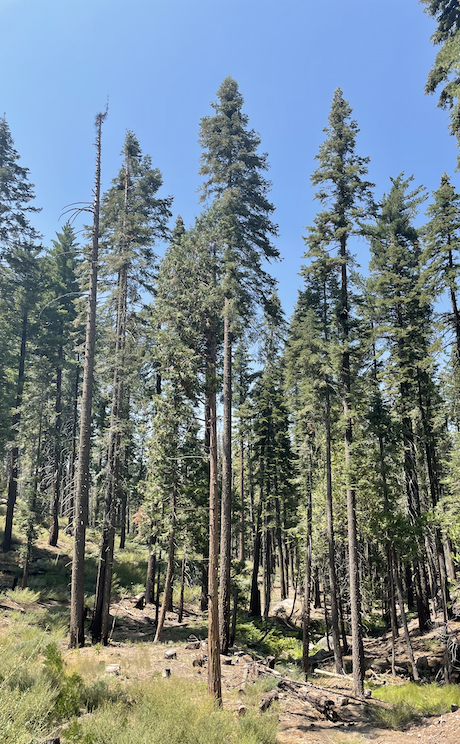
This method creates smaller roughly ten-thousand-acre containers on the land, so that if a high-intensity fire broke out, even if we are unable to stop it from burning, we would have a better chance to preventing the fire from spreading.
We start by assessing the land and identifying natural features where the fire may be stopped, redirected, or contained, such as rivers, ridges or roads.
We can then install fuel management features to create PODs within the forests.
Once we identify the PODs, we then go into each container and bring it back to health through low-intensity prescribed fires, and thinning the undergrowth of smaller trees, and shrubs to decrease fuel for fire.
These PODs allow us to systematically work across large landscapes to increase forest health and work to prevent mega-fires from devastating the Sierra Nevada Region.
This is just one tool in our toolbox as we work to restore the Watershed! We'll be back in your inbox next week to highlight more ways we're stewarding ecological resilience!
