
Restoring Flow: Removing a 1960s Haul Road Bridge from the Tuolumne River
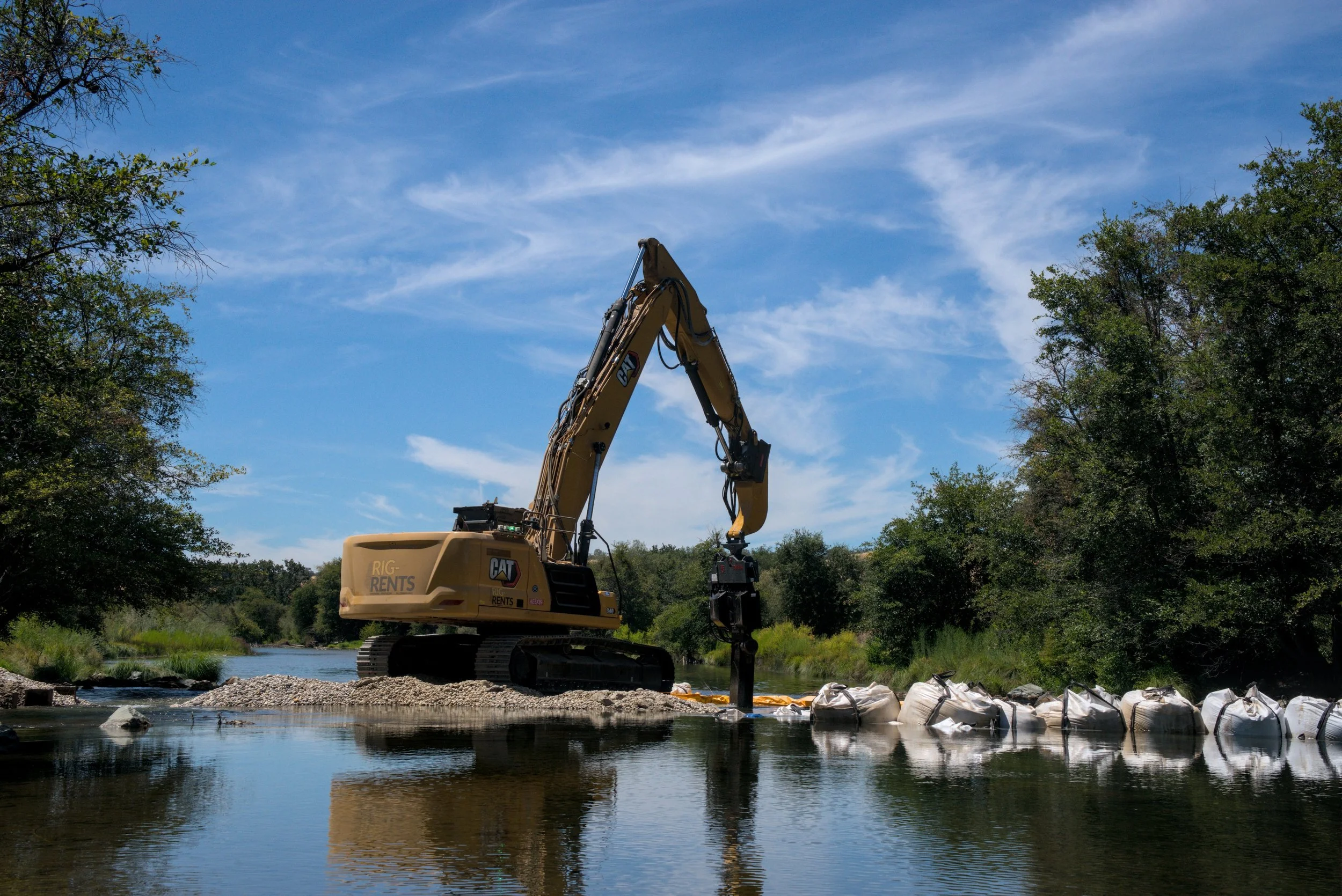
Restoration is underway at La Grange, where Tuolumne River Trust is tackling a long-standing obstacle to a healthier, free-flowing river.
A Legacy Left Behind
In the 1960s, during construction of Don Pedro Dam, a haul road bridge was built across the Tuolumne River to move heavy equipment and materials. When the work was complete, large chunks of the bridge — concrete blocks, steel beams, and sheet piles — were abandoned in the river.
For decades, these remnants have been more than just an eyesore. They’ve created hazards for boaters, blocked salmon migration, and disrupted the river’s natural flow.


Construction of the New Don Pedro Dam. Photos courtesy of Turlock Irrigation District
Construction Begins at La Grange
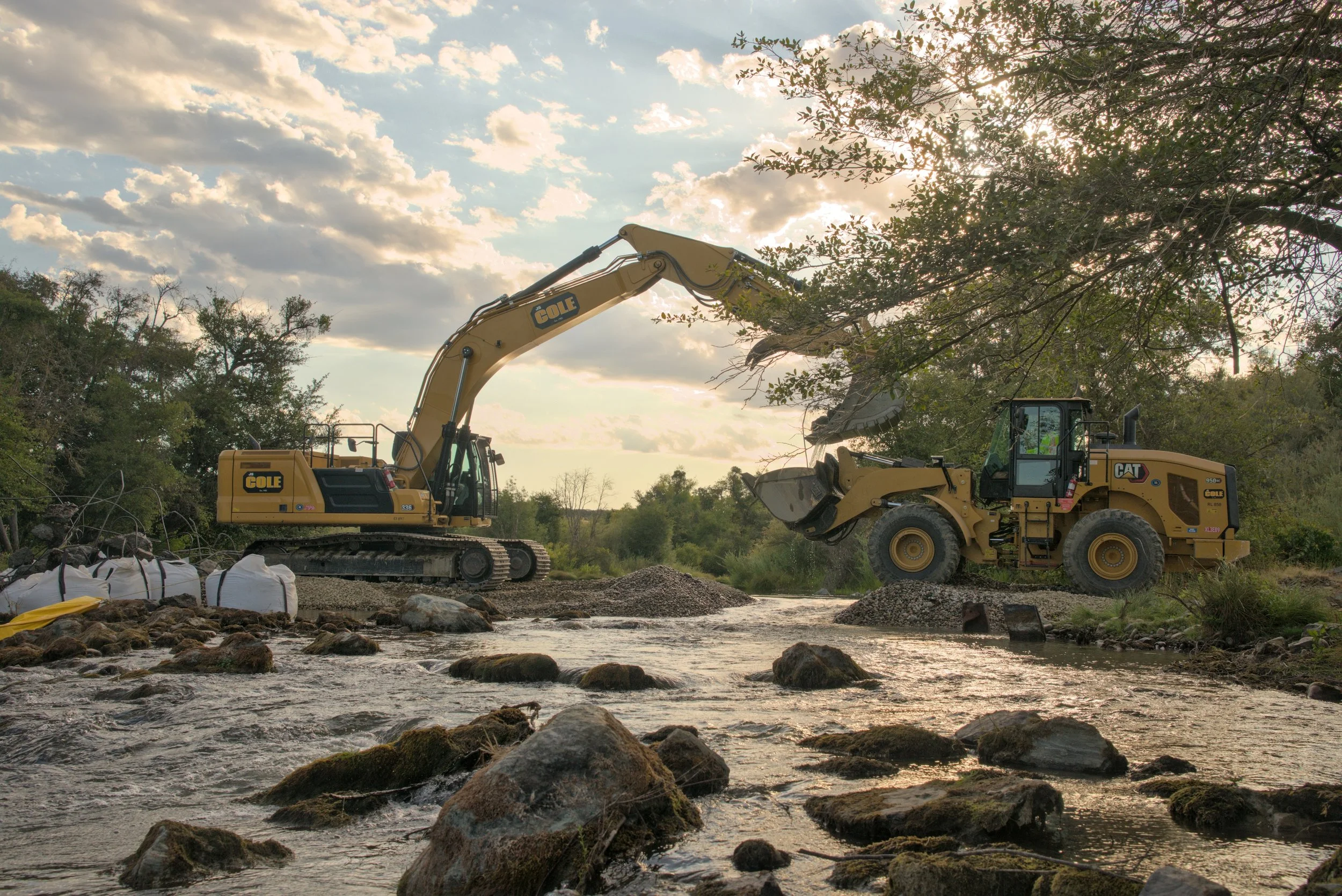
This summer, our restoration crew mobilized to begin removing the remaining debris from the river. The work isn’t simple — it requires specialized equipment and careful planning to protect both the river and its wildlife.
As Restoration Program Director Julia Stephens describes it:
“We’re using a massive excavator with a special attachment that can grip, jiggle, and pull the steel and concrete out — almost like pulling teeth. To keep the equipment out of the water, we’ve built a gravel berm that allows the excavator to reach the site while keeping the river flowing.”
La Grange by the Numbers
So far, our crews have already:
Removed 18 I-beams from the river and cut 3 additional I-beams that couldn’t be fully extracted by equipment
Pulled out 35 sheet piles
Hauled away 75 tons of concrete from the old bridge deck
Cleared ½ ton of rebar tangled in the riverbed
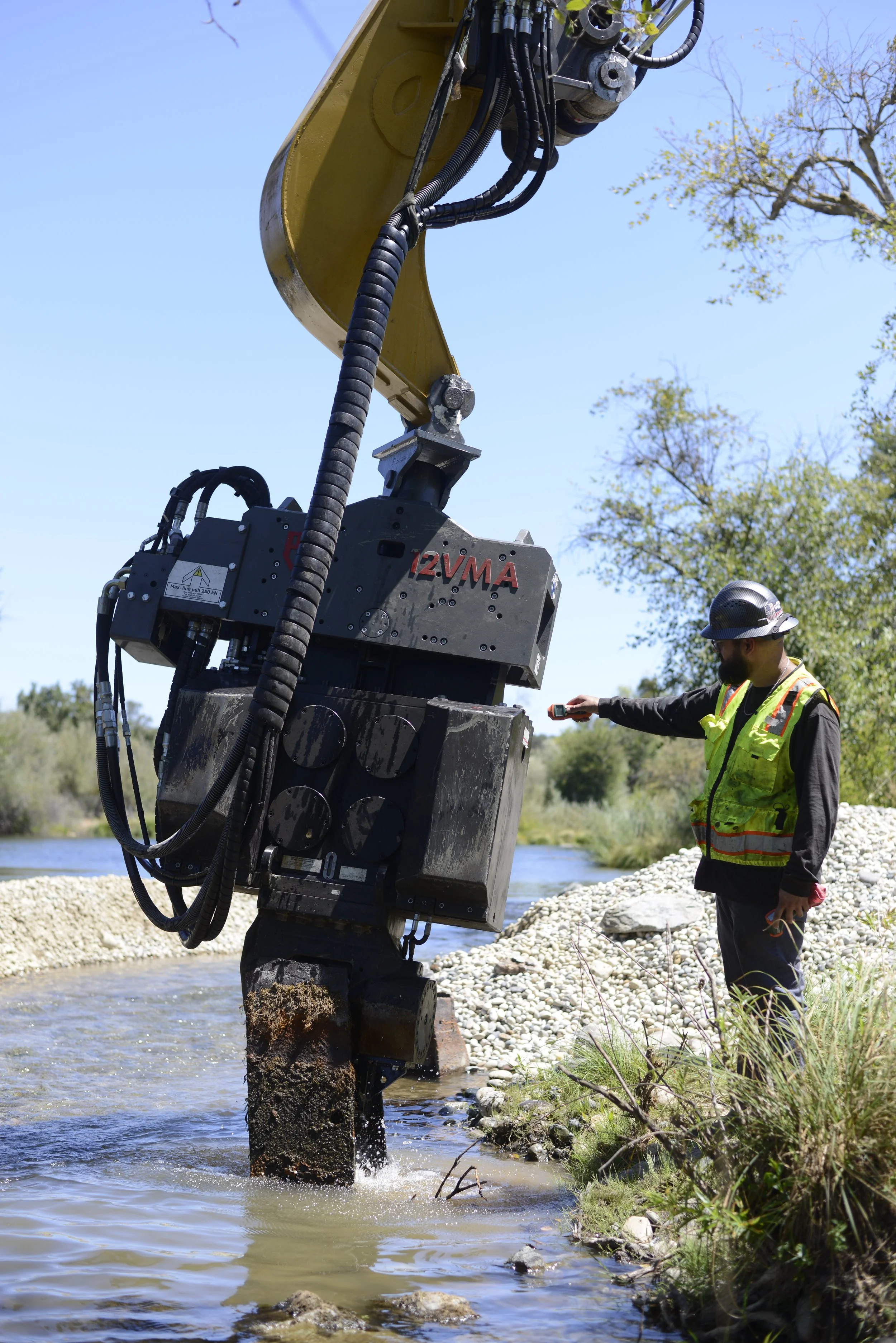
Temperature monitoring of the excavator.
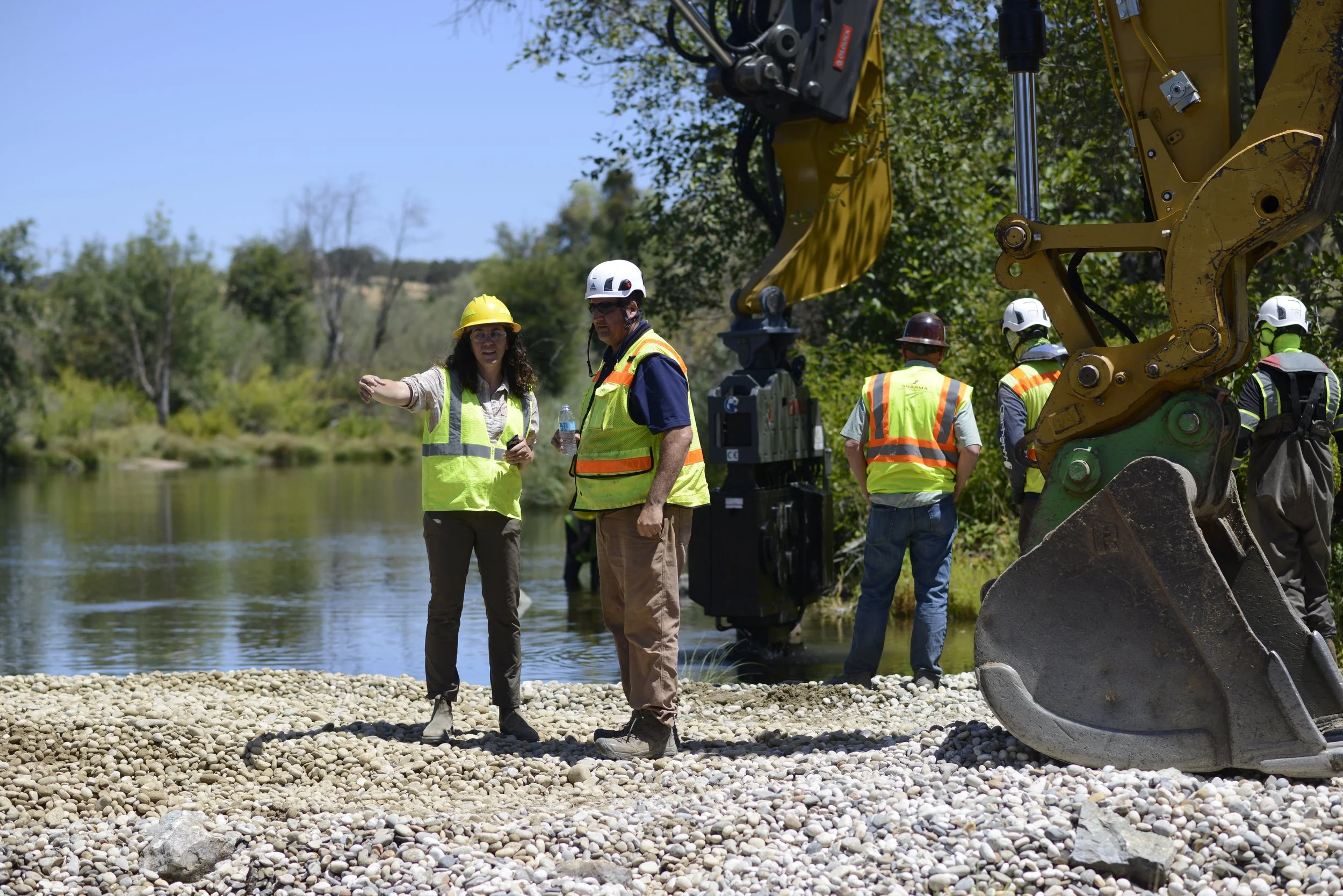
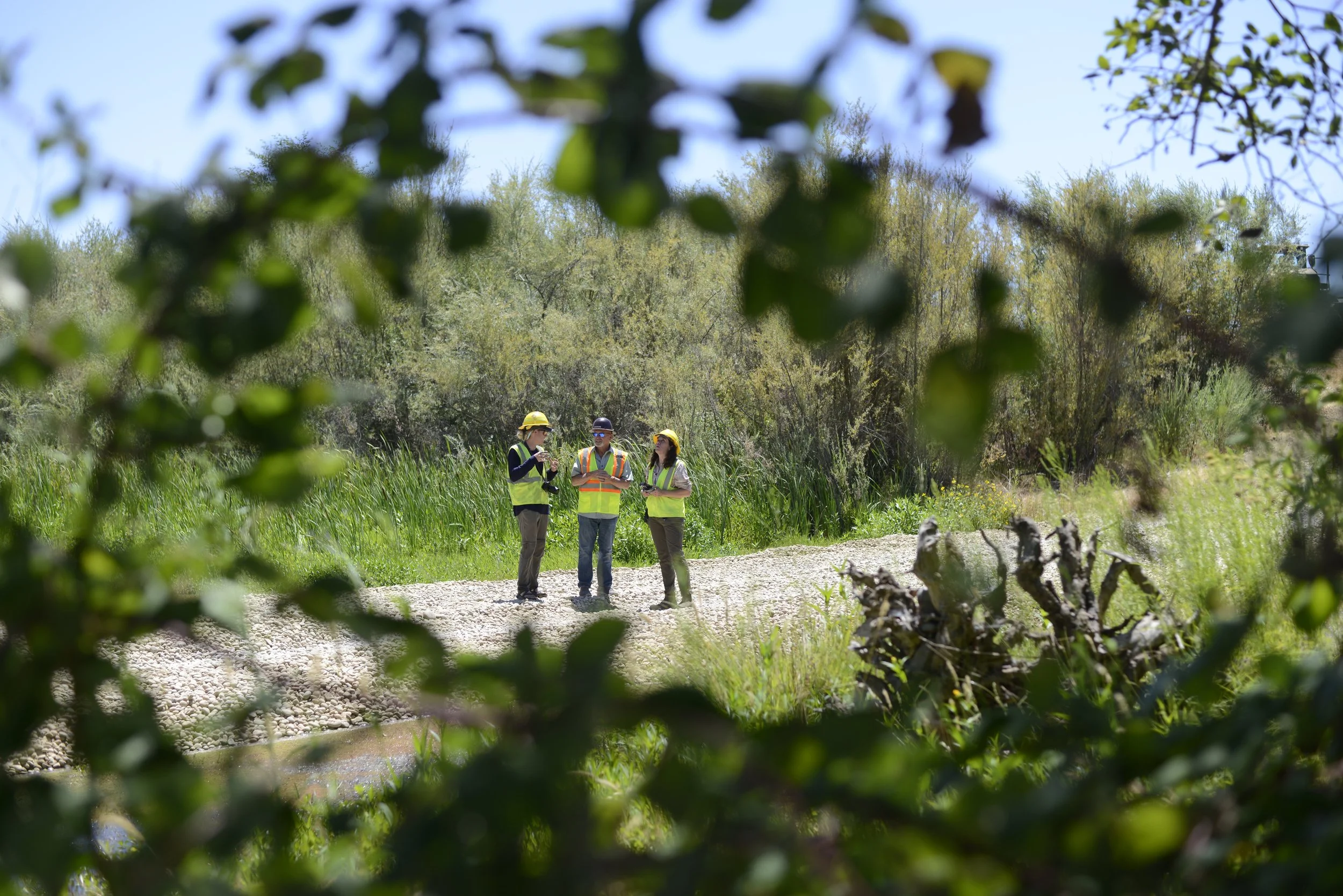
Julia Stephens, left, consults with Triangle Land Restoration manager.
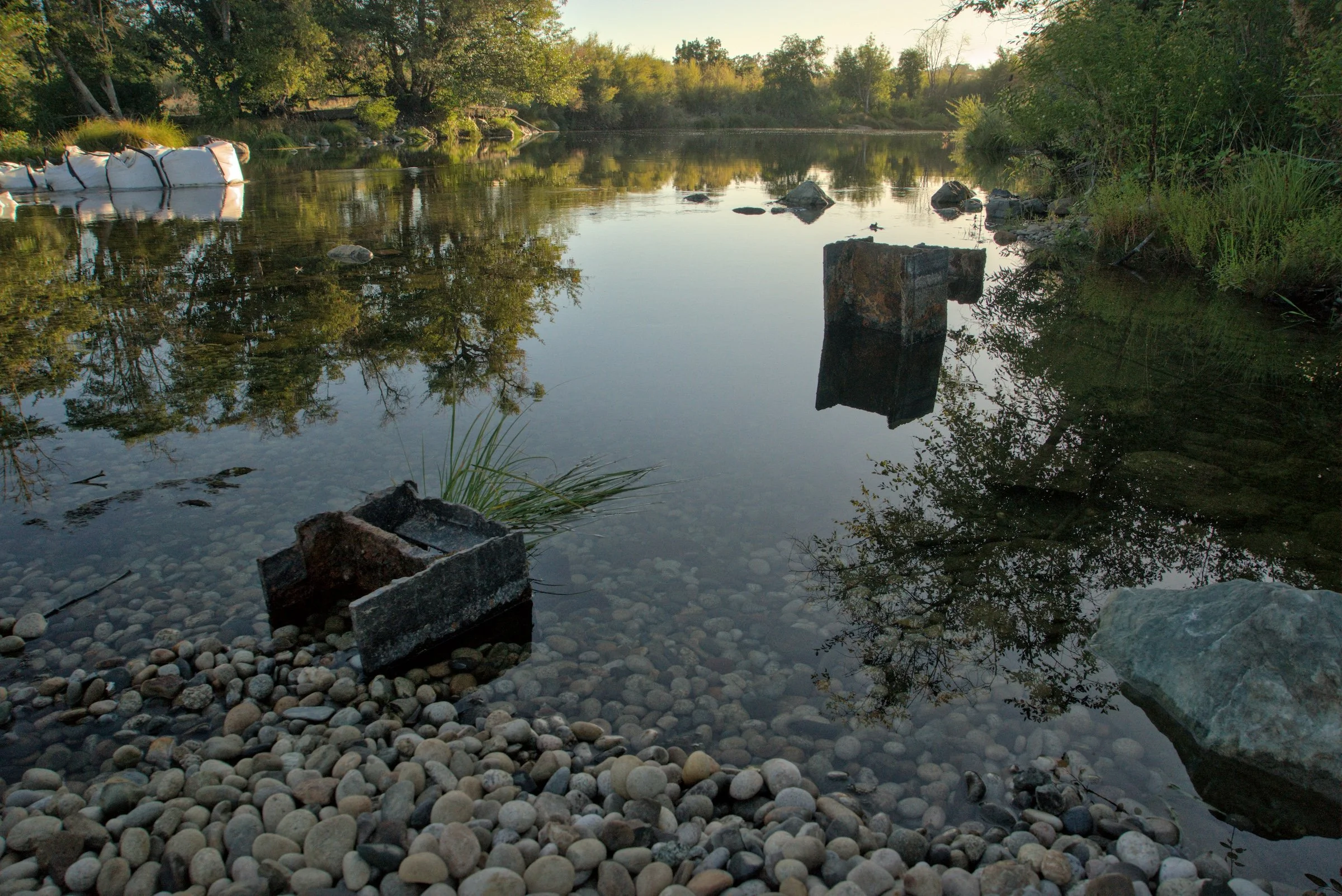
Remnants of old steel beams left behind in the Tuolumne River.
Protecting Wildlife While Restoring Habitat
Restoration is about more than removing concrete and steel — it’s about protecting the life that depends on the river. Throughout construction, a biological monitor is on site to watch for sensitive species like Western pond turtles, ensuring they remain safe during the project.
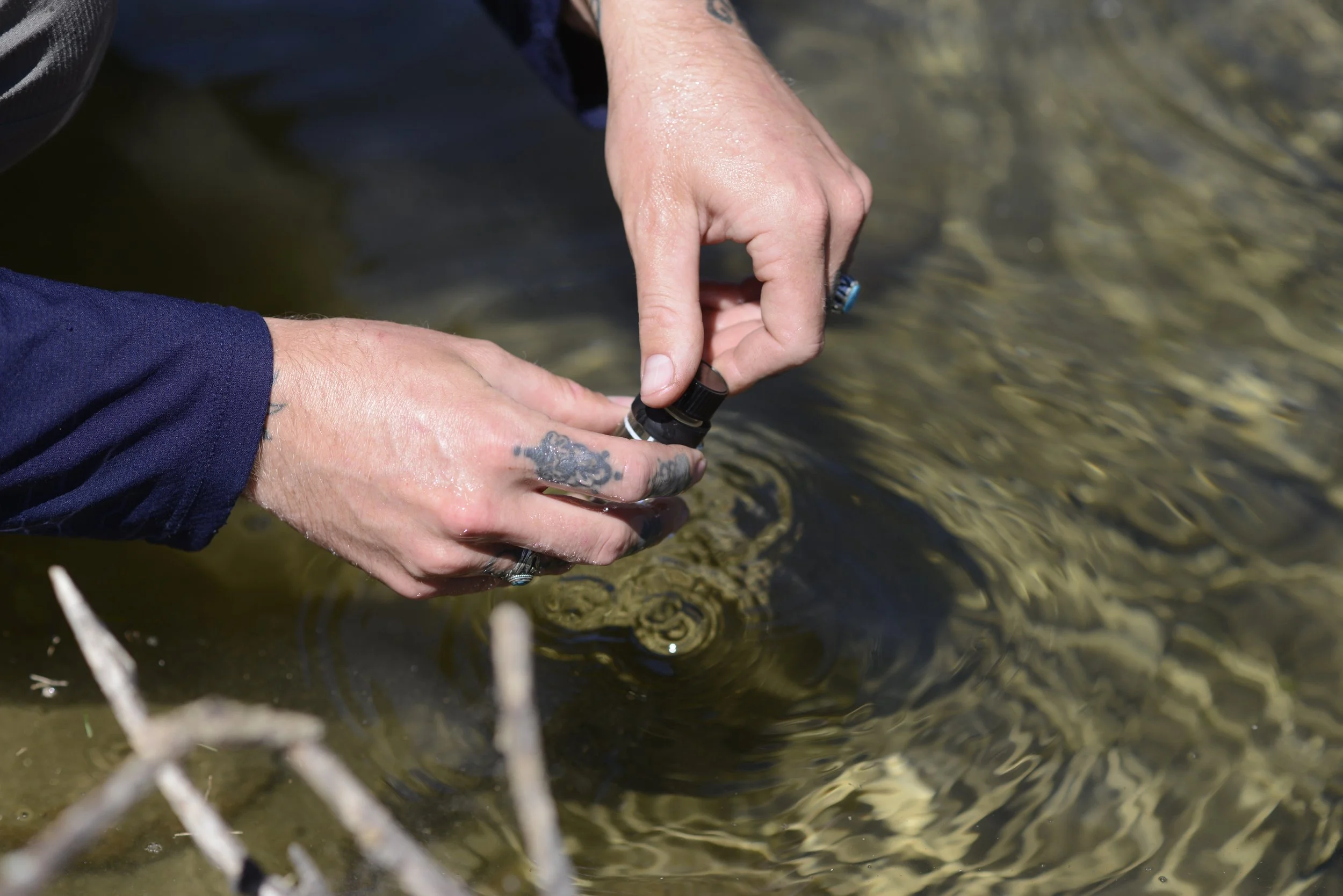
We’re also conducting turbidity sampling throughout construction to monitor water quality in real time. This ensures that the work doesn’t create harmful sediment levels and that the river remains healthy for fish and other aquatic life.
By combining active restoration with close monitoring, we’re improving conditions for salmon and other native species while also making the river safer for the community members who boat and paddle here.
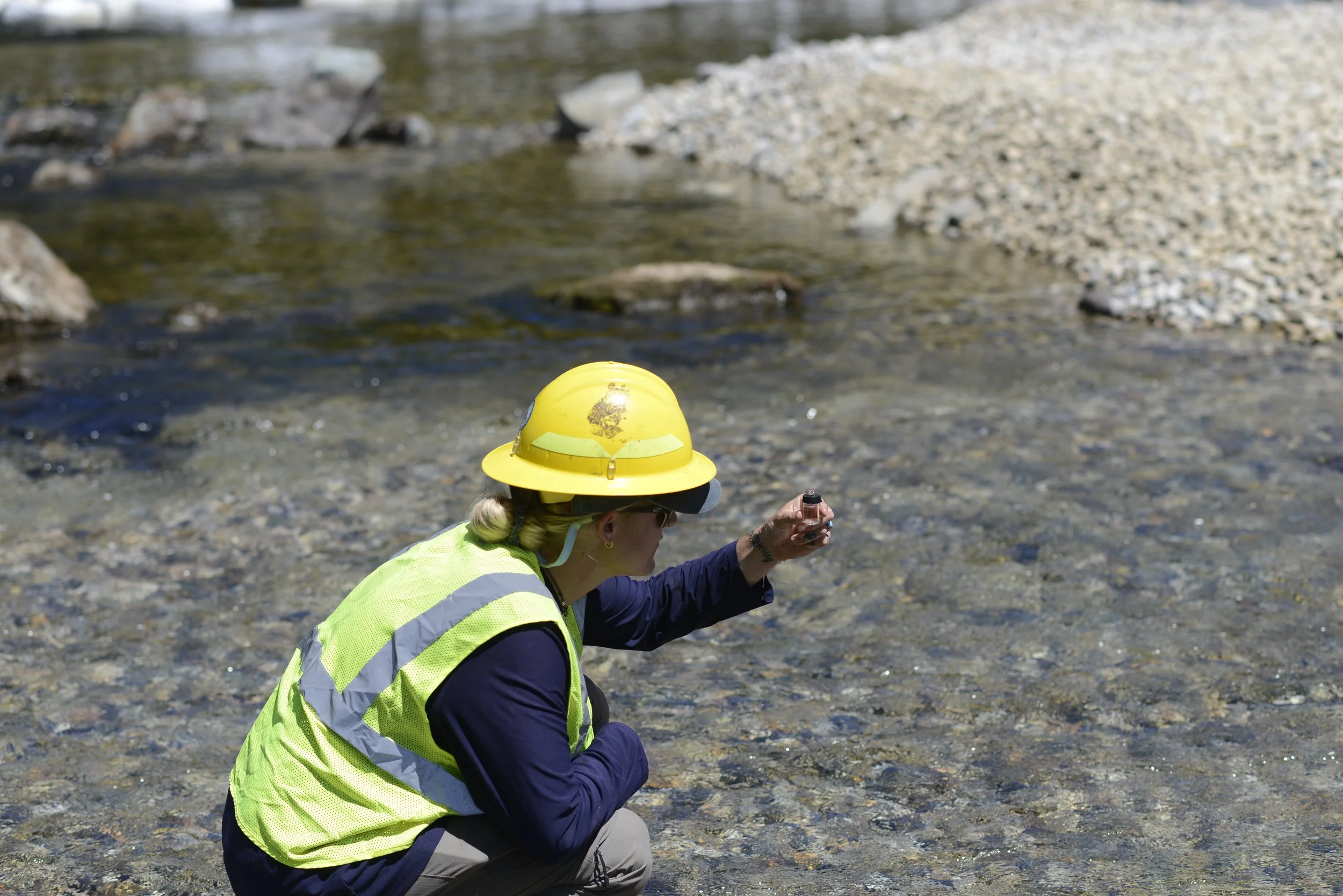
Tuolumne River Trust Restoration Field Specialist Weston Stulac takes a turbidity sample at La Grange.
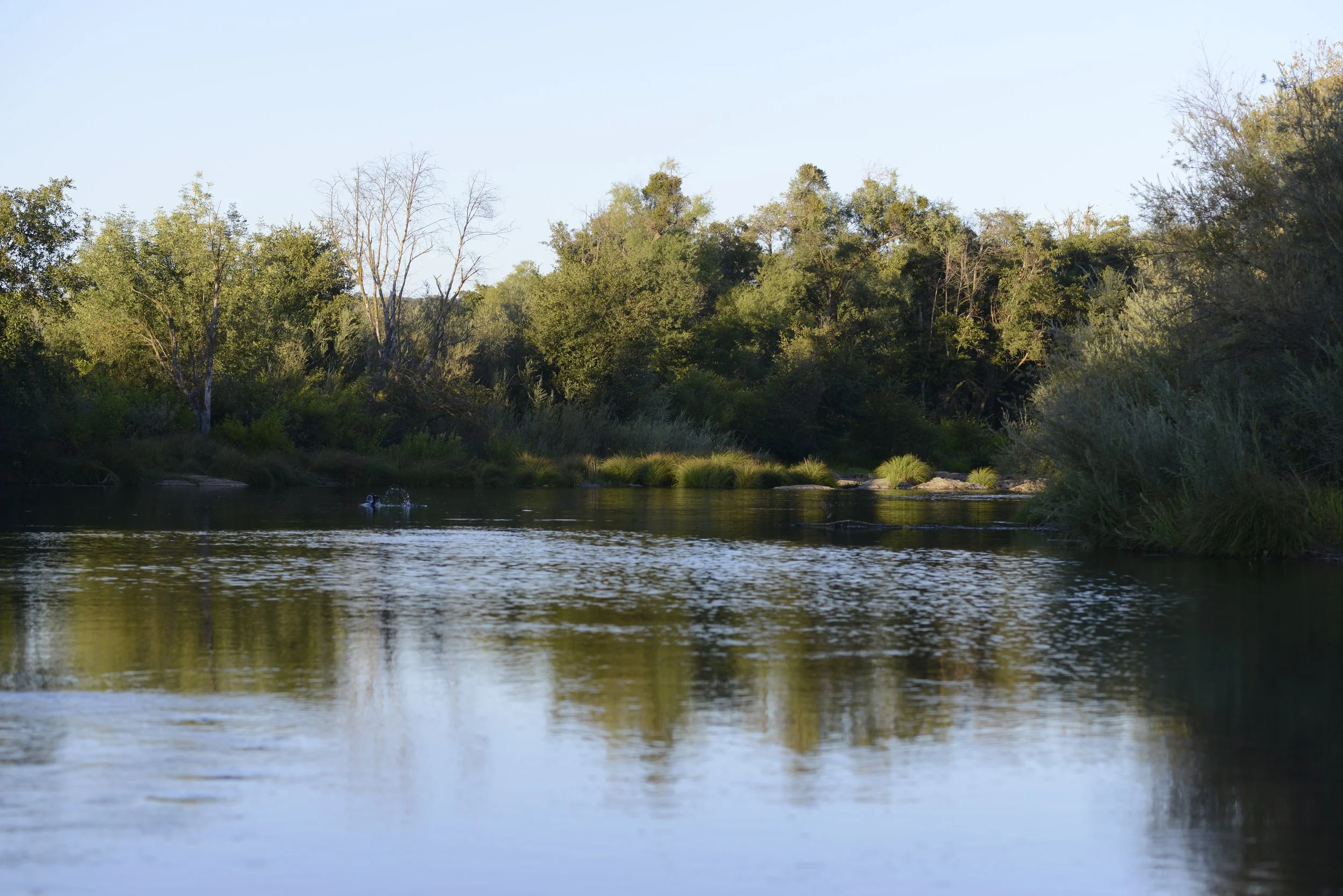
A spring-run Chinook leaps at La Grange — the first population in decades to reach this far. Recent restoration has improved habitat for salmon, rainbow trout and steelhead, with more phases ahead.
A Step Toward a Freer Flowing Tuolumne
Piece by piece — from massive I-beams and sheet piles to tons of concrete and twisted rebar — we are dismantling the legacy of the 1960s haul road bridge and returning this stretch of the Tuolumne to a healthier state.
The La Grange project is one of several sites where legacy infrastructure continues to impact the Tuolumne. Each removal is a step toward restoring the river’s health, improving habitat, and reconnecting communities with a river that flows more freely.
We’re excited to share this progress — and grateful for the partners, supporters, and community members who make it possible.
Join Us in Restoring the Tuolumne
This work is part of our long-term commitment to restoring the Tuolumne River for salmon, wildlife, and future generations. Stay tuned for more updates as the project continues — and join us in protecting the river we all depend on. Sign up for our newsletter to stay in the know of restoration updates.
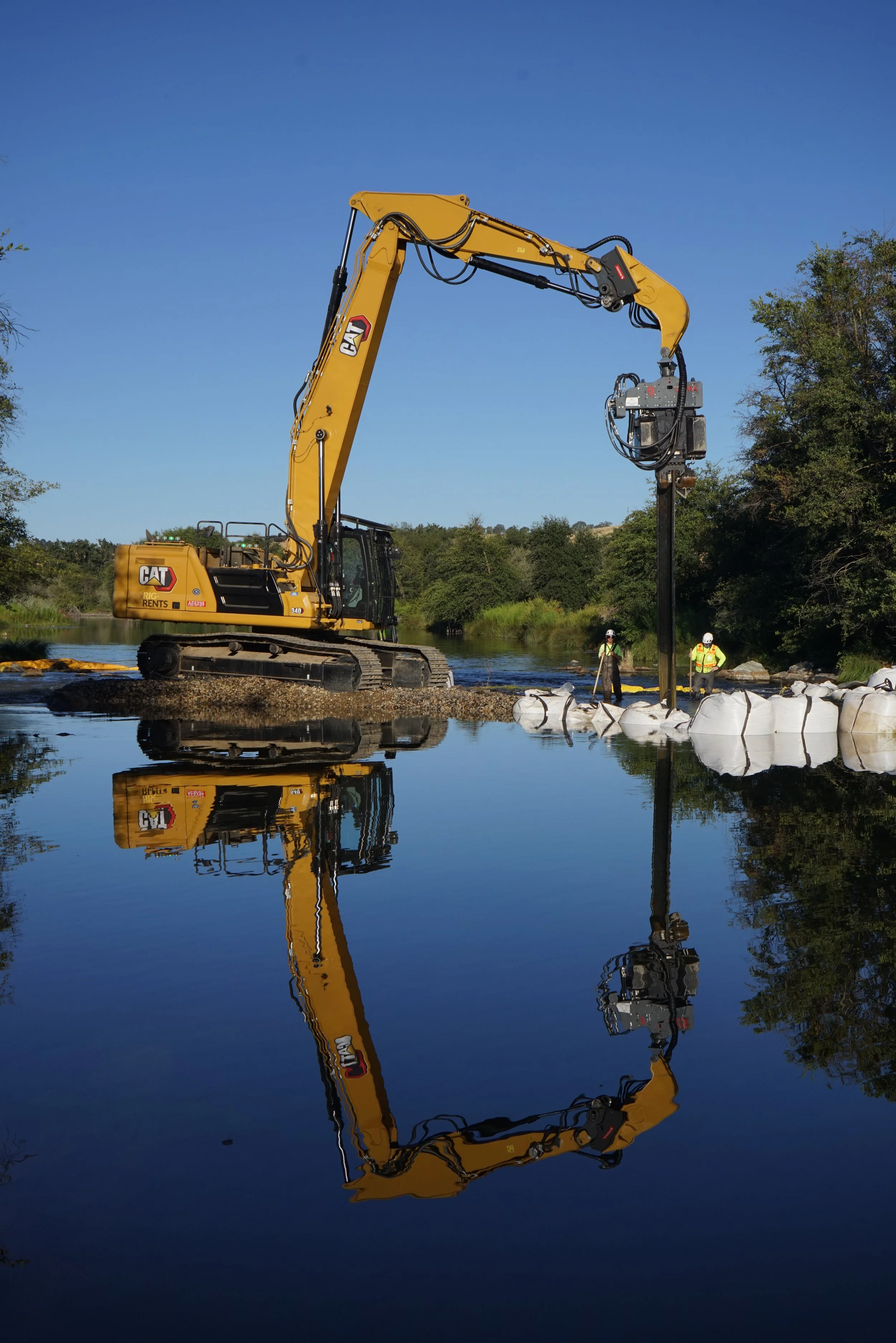
This project would not be possible without the collaboration and support of our funders and partners. Huge thanks to our construction contractor Triangle Land Restoration and our engineering/design team at FlowWest for bringing this work to life.
We are also deeply grateful to our funders — the California Department of Water Resources, the National Fish and Wildlife Foundation, the California Department of Fish and Wildlife, and the Office of Spill Prevention and Response — for making this restoration possible.
Together, we’re helping return the Tuolumne River to a healthier, freer-flowing future.
